
S&P Global Ratings on Monday retained its forecast of 9 per cent contraction in the Indian economy for the current fiscal, saying even though there are now upside risks to growth but it will wait for more signs that COVID infections have stabilised or fallen. S&P, in its report on Asia Pacific, projected the Indian economy to grow at 10 per cent in the next fiscal.
Currency scarcity weighed on manufacturing performance where growth of new work flows slowed
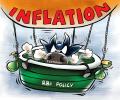
'Election years tend to see high government expenditure on unproductive schemes, though that money sloshing around can boost private consumption.' 'Again, it can mean higher inflation,' explains Devangshu Datta.

Besides, Toyota and MG Motor also reported nil sales as they suspended operations even before the imposition of lockdown on March 25 to check the spread of coronavirus. In two-wheeler segment, niche bike maker Royal Enfield said it had zero sales in the domestic market but exported a total of 91 units last month.
Expect a more modest out-turn of around 5 per cent (if not less) because of the longer-term scarring effects of the Covid shock, the sharply slowing growth in the pre-Covid years and some scepticism about the growth-efficacy of some of recent official policy initiatives, explains Shankar Acharya, former chief economic advisor to the government.
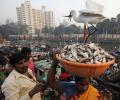
Food prices, which have contributed to a large part of inflation over recent years, have remained benign, despite unseasonal rain.

Manufacturing, which constitutes around 80 per cent of the index of industrial production, grew 19.4 per cent in April against 0.4 per cent a year ago, according to official data released on Friday.
Retail inflation inches up to 3.77%; IIP growth dips to 3-month low
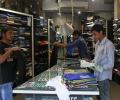
The improvement in business conditions promoted job creation, while confidence towards the year-ahead outlook for activity was at a four-month high during March.

Sustained growth only if domestic manufacturing rises

In comparison, industry grew by 2.1 per cent in May last year.
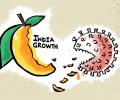
Those hardest hit by the second wave of the pandemic have been blue-collared workers, doctors and healthcare workers, law and order and municipal personnel, individuals eking out daily livelihood, and small businesses. And there should be more measures taken to alleviate their pain, the Reserve Bank of India (RBI) said on Monday. The report also indicated that the RBI's growth numbers might have to be revisited as the central bank's real GDP growth projection of 26.2 per cent given in the MPC's resolution of April 7 for the first quarter of 2021-22, were "made before the full fury of the resurgence." Nevertheless, the "resurgence of COVID-19 has dented but not debilitated economic activity in the first half of Q1: 2021-22.

The country's GDP grew at the fastest pace in seven quarters at 7.7 per cent in the January-March period, retaining the fastest growing major economy tag on robust performance by manufacturing and service sectors as well as good farm output.

India's index of industrial production rose by 6.4 per cent in February over the same period a year earlier, the government said on Thursday.

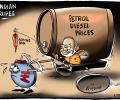
Despite admitting to price pressures both from food items and input prices, RBI Governor Shaktikanta Das on Wednesday hoped that a normal Southwest monsoon will have a "soothing impact" on inflation pressures and ruled out any wide variations in medium-term inflation forecast from what was given in April. In an unscheduled address earlier in the day amidst the raging pandemic, Das said the overall outlook for the economy is highly uncertain and is clouded with downside risks. He offered a slew of relief and liquidity measures to individuals and small businesses apart from a Rs 50,000 crore special liquidity window to the healthcare sector.
The employment situation remains dire. Whatever can be done to promote greater low-skill employment should be pursued aggressively, advises former chief economic adviser Shankar Acharya.
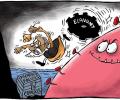
India's economy is estimated to contract by 9.6 per cent in the fiscal year 2020-21, reflecting a sharp drop in household spending and private investment, and the growth is expected to recover to 5.4 per cent in 2021, the World Bank said on Tuesday. In its Global Economic Prospects report, the World Bank said that the informal sector, which accounts for four-fifths of employment, has been subject to severe income losses during the COVID-19 pandemic.

Poor performance of coal, petroleum refinery products and natural gas pulled down the core sector growth to 2.1 per cent in December, 2013 from 7.5 per cent in the same month a year ago.

'There is a lot that I find extremely annoying in Ramu, like his constant attempts to shock and stir up controversy by needlessly needling sacred cows.' Subhash K Jha salutes the maverick filmmaker on his birthday.
India's economic growth remained subdued at 4.7 per cent in 2013-14 and at 4.6 per cent in the fourth quarter of the financial year, mainly due to a decline in manufacturing and mining output.

83% of the CEOS plan to hire more in the new year.

New business orders fall at faster pace, with index at 47.6 in March from 49.5 in February.

'The fundamentals look strong, but we will have to see if they translate into actual demand.' 'Because the April-May marriage season didn't see much sales due to the lockdown.'

Share markets will have only three trading days this week with Monday and Wednesday being holidays due to general elections in Mumbai and Maharashtra Day, respectively.

The survey noted that advertising campaigns supported the increase in new work growth in the sector amid competitive pressures.

Analysts polled by Reuters had expected an annual output growth of 3.5 per cent for the month.

The HSBC India Services Business Activity Index, that tracks changes in activity at Indian services companies on a month-by-month basis, fell from 51.6 to exactly 50.0 in October.

SII said it will address the limited capacity by scaling up the vaccine production over the next two months.

In the last financial year, GDP growth was 7.3 per cent.
Industrial output grew by 6.2 per cent in the same month a year ago. This is the third time in this fiscal that industrial growth has turned negative.

The benchmark BSE Sensex ended down 2.23 per cent. The Bank Nifty fell 3.59 per cent.

The NSE Nifty gained 77.85 points, or 0.71 per cent, to finish at 11,008.30. Intra-day, it shuttled between 10,821.55 and 11,035.65.

The factory, which had become synonymous with Vile Parle station, is being shut down due to lowering production output

Service providers' confidence with regard to the 12-month outlook for business activity remained positive.

The substantially increased economic dualism may exert lasting negative influences which could include a reduced potential for economic growth; the persistence of a very weak employment and poverty situation; rising social and political discord; and heightened vulnerability to geopolitical challenges, cautions Shankar Acharya, former chief economic adviser to the Government of India.

Industry chamber Federation of Indian Chambers of Commerce and Industry said the Reserve Bank of India should intervene and cut interest rates.

The government did not tell us why our economy had imploded. The prime minister simply stopped speaking on the subject, asserts Aakar Patel.
Of the BRIC (Brazil, Russia, India and China) economies, China, Russia and Brazil posted sharper increases in activity, but India registered a fourth successive decline in output.
The seasonally adjusted Nikkei India Services Business Activity Index fell to 50.2 in May, from 51.0 in April, pointing to the slowest growth rate in the current 12-month stretch of expansion.
Retail inflation in February has come down to a 25-month low of 8.1 per cent.
